
Discover Ohrid’s Most Beautiful Places
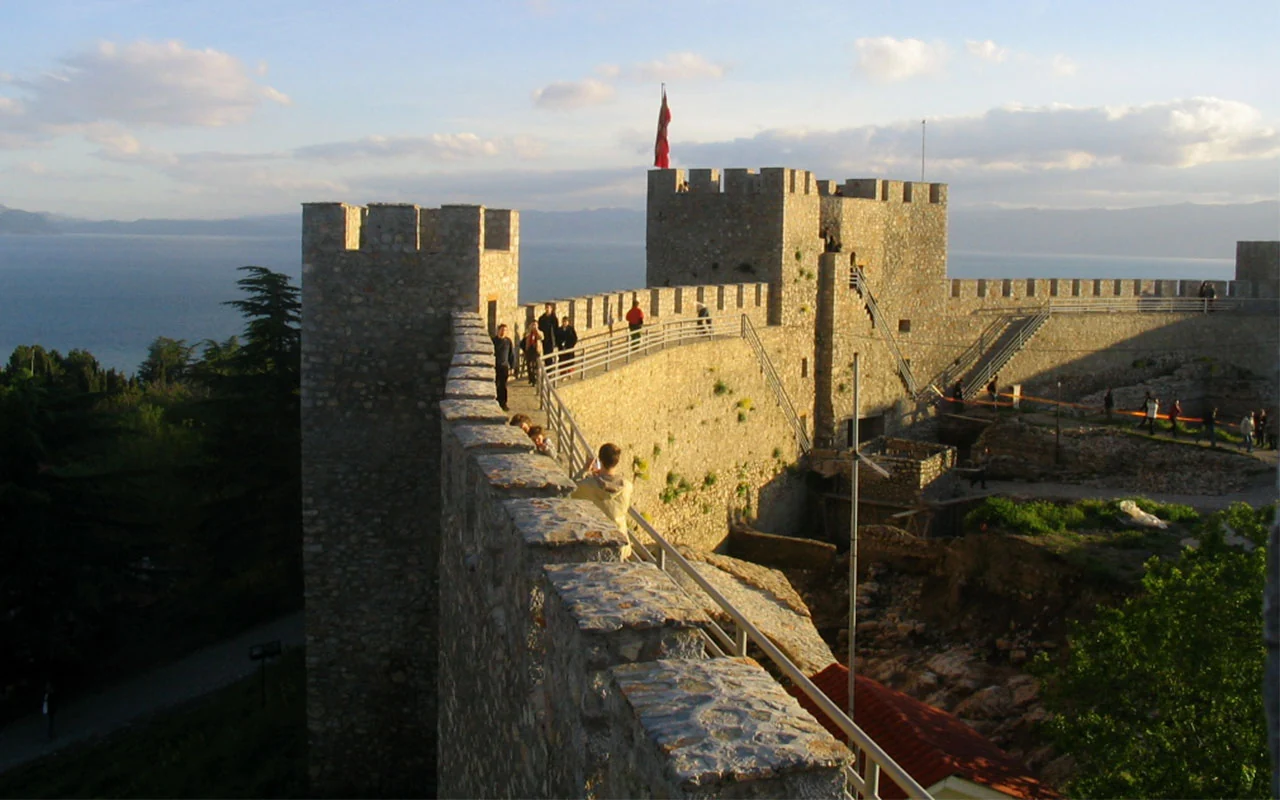
Samuel’s Fortress
Samuel’s Fortress is one of Ohrid’s best-known landmarks, standing on the highest hill above the city. The fortress is an important part of Ohrid’s history and reflects its significance as a strategic and political centre over the centuries.
The history of the fortress is linked to the ancient city of Lychnidos, regarded as Ohrid’s ancient name. Historical records of fortifications on the hill date back much further than the medieval period. During the Middle Ages, the fortress was extensively restored and strengthened, particularly under Tsar Samuel.
Today, visitors can walk along sections of the surviving walls and enjoy panoramic views of Ohrid, Lake Ohrid and the surrounding mountains.
Plaoshnik Archaeological Park
Plaoshnik Archaeological Park is one of Ohrid’s most important archaeological and spiritual sites. It lies between Samuel’s Fortress and Saint John at Kaneo, close to the shore of Lake Ohrid.
The site contains cultural layers from different historical periods, from prehistory and antiquity to the Middle Ages. Of particular importance is the Church of Saints Clement and Panteleimon, associated with Saint Clement of Ohrid and the development of the city’s spiritual and educational life.
Archaeological excavations at Plaoshnik have uncovered significant remains, including early Christian buildings and mosaics. Today, Plaoshnik is a place where history, archaeology and spiritual tradition come together.
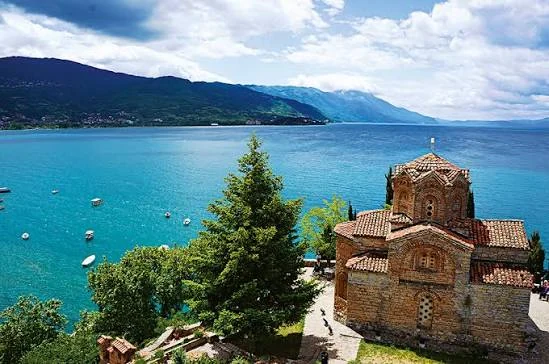
Church of Saint John the Theologian at Kaneo
Saint John at Kaneo is one of Ohrid’s most recognisable landmarks. It stands on a rocky hill above Lake Ohrid and is known for its beautiful setting and medieval architecture.
Built during the medieval period, the church is an important example of Byzantine church architecture in Ohrid. It is particularly known for its form and the frescoes that decorate its interior.
Its location offers one of the finest views of the lake and the old town. This makes Saint John at Kaneo one of Ohrid’s most frequently visited sites. UNESCO includes it among the significant churches that demonstrate the high standard of medieval art in the region.
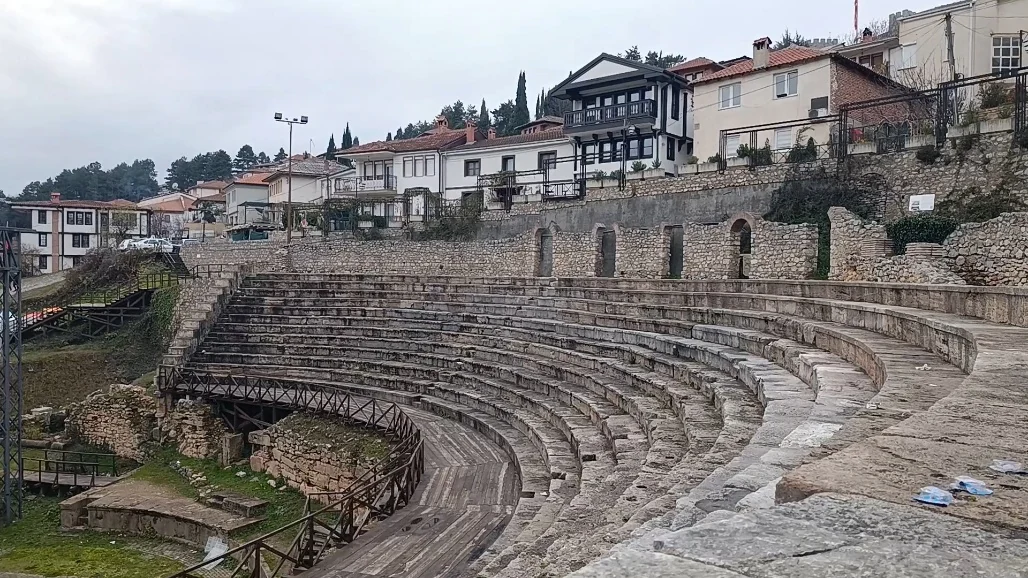
Ancient Theatre of Ohrid
The Ancient Theatre of Ohrid stands in the old town and is one of the city’s most important archaeological sites.
The theatre dates from the Hellenistic period, around the end of the third century or the beginning of the second century BC. It was also used during the Roman period.
Over time, the theatre was abandoned, and parts of its structure were covered over and built upon. Archaeological investigations began in the twentieth century, gradually revealing the site.
Today, the Ancient Theatre once again serves as a cultural venue. It hosts performances, concerts and other cultural events, particularly as part of the Ohrid Summer Festival.
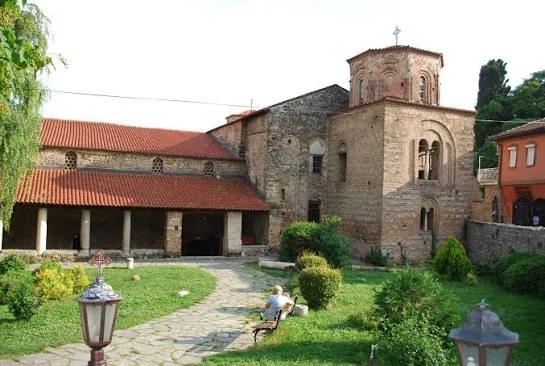
Church of Saint Sophia
The Church of Saint Sophia is one of Ohrid’s most significant medieval monuments. The present church dates from the eleventh century and is an important example of medieval church architecture and art.
Its interior preserves valuable frescoes that reflect the development of Byzantine art in Ohrid. Throughout its history, the church has played an important spiritual and ecclesiastical role.
Today, Saint Sophia forms part of Ohrid’s rich cultural heritage and is one of the most significant churches visitors can explore in the old town. UNESCO highlights the church for its artistic and historical value.
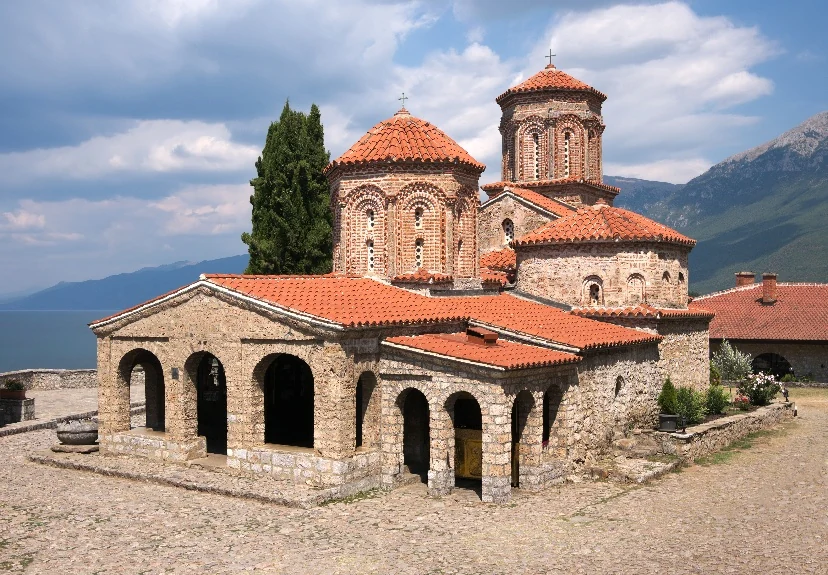
Saint Naum Monastery
Saint Naum Monastery stands on the southern shore of Lake Ohrid in beautiful natural surroundings. It is dedicated to Saint Naum of Ohrid, one of the disciples who continued the work of Saints Cyril and Methodius.
The monastery is an important spiritual and cultural centre and one of the most visited places in the Ohrid region. Visitors can explore the monastery church, enjoy the natural surroundings and visit the Black Drim springs (Crn Drim).
This is an excellent choice for visitors who would like to combine history, spirituality and nature in a single tour.
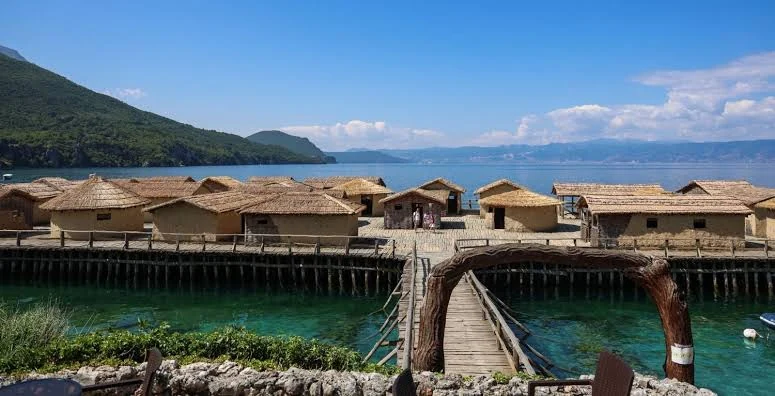
Bay of Bones Museum
The Bay of Bones Museum is an archaeological site and museum on the water, located on the shore of Lake Ohrid near Peštani.
The site reconstructs a prehistoric settlement built on wooden piles above the lake. Archaeological research here has shown that people lived in pile-dwelling settlements as far back as prehistoric times.
A visit to the Bay of Bones Museum offers an insight into the lives of the people who lived beside Lake Ohrid thousands of years ago. The site adds to the story of the Ohrid region’s exceptionally long history. UNESCO notes that several sites in the shallow waters along the lakeshore provide evidence of prehistoric pile-dwelling settlements.
Discover Ohrid with a Local Guide
Ohrid’s history is found in more than books: it is visible in its fortresses, churches, archaeological sites and the natural surroundings of the lake. Choose the places you would like to visit and create your own travel story.